

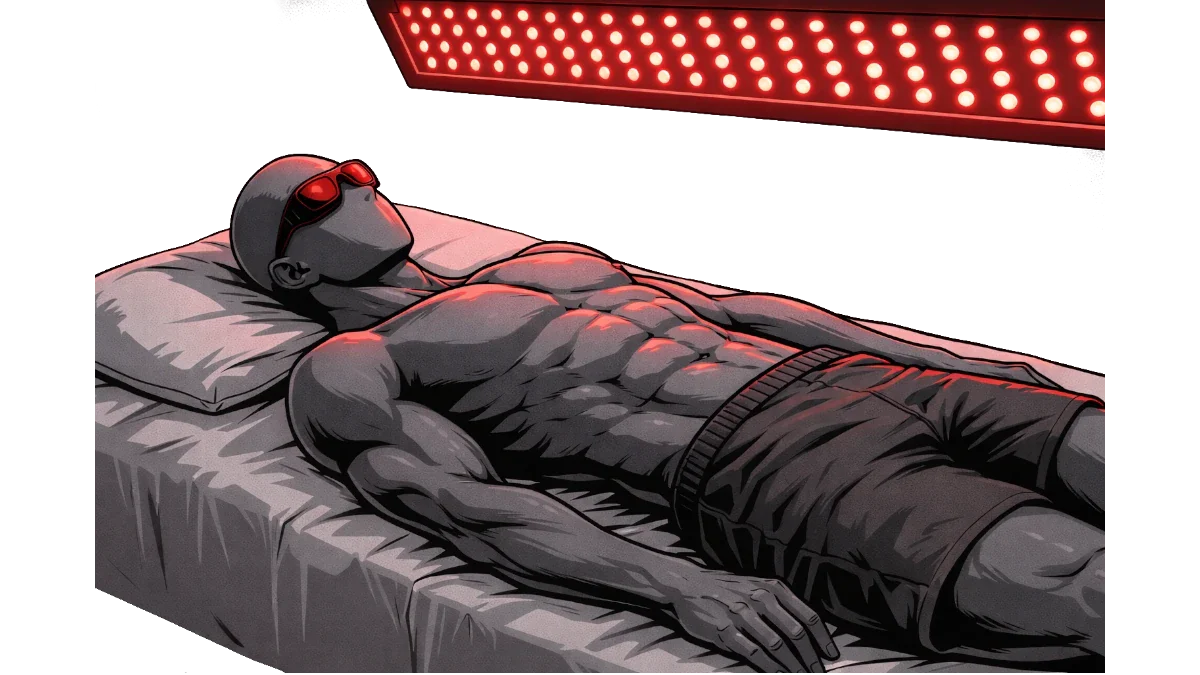
WHAT IS RED LIGHT THERAPY?
It is 7 a.m.
The first rays of sunlight appear and make me react, even though my eyes are blindfolded . I stir, then, a few minutes later, I wake up.
By the way, did you know that some animals flee from light even though they don't have visual organs ?

That's because light's purpose isn't just to illuminate you. It acts directly on your biology : it It influences your hormones and repairs your cells. It even influences plant growth.
And it is by relying on the impacts of light on our body that a practice has developed, after showing notable benefits on the skin, sleep and recovery: red light therapy .
DEFINITION
Red light therapy, also called red light therapy or photobiomodulation, is a method of treatment using light .
The idea is to expose the skin to low-intensity red or infrared light, with the aim of triggering biological reactions that will have beneficial effects on your health.
Red light vs. blue light
Unlike blue light, red light penetrates deeper into the skin .
Why? Because its wavelength (nm) is more extensive and longer, allowing it to pass through tissue more easily.
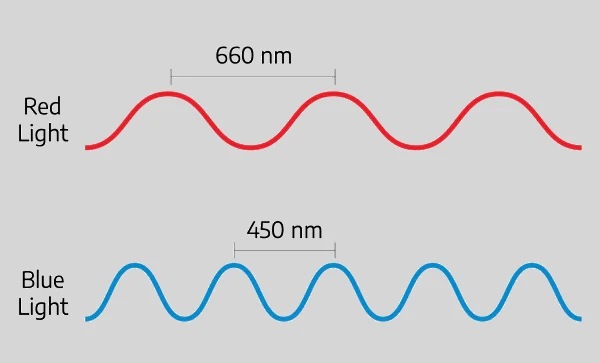
Imagine a hole: it is easier to fit a straight stick into it than a deformed one.
This characteristic allows red light to reach structures inside your cells, the mitochondria , which are responsible for producing energy essential for proper cell function.
This has the effect, among other things, of improving your recovery , your skin and your sleep.
The same principle explains why the sea appears blue : blue waves are scattered while red waves penetrate deeply and are absorbed.
Therapeutic waves
There is an ideal "therapeutic window" between 600 and 1100 nanometers (nm) corresponding to visible red light and near infrared.
They act primarily on the surface, that is, on the skin and subcutaneous tissues, which is beneficial for collagen and healing.
They penetrate deeper, reaching the muscles and joints, facilitating your muscle and joint recovery
Depending on your objective, it is therefore important to choose the right wavelength for maximum results, even though, in practice, most devices offer both types (red and near infrared).
BENEFITS OF RED LIGHT
Recovery and performance
Red light is a practice that is increasingly used among athletes, particularly in elite sports .
A study highlights a significant improvement in lower limb muscle strength at different follow-up times: 24 h , 48 h , 96 h and even after 8 weeks.
But beyond performance, red light is often highlighted for its impact on recovery by activating several complementary biological mechanisms:
An essential molecule for cellular energy that allows your muscles to repair themselves more quickly and regain their optimal function.
Two mechanisms responsible for muscle soreness and persistent muscle fatigue.
This facilitates the supply of oxygen and nutrients to the muscles, while accelerating the removal of metabolic waste (lactate).
Studies suggest that red light could modulate the transmission of pain signals, by influencing the activity of pain receptors and promoting the release of endorphins.
All these combined effects allow you to have a faster recovery , with less pain and better tissue regeneration, which also supports your muscular endurance if practiced before a session.
Sleep and circadian rhythm
Unlike blue light, red light does not cause the suppression of melatonin .
This is also why some people use red light bulbs in the evening to avoid disrupting their circadian rhythm and to promote better sleep.
Red light therapy in the evening may even improve nighttime melatonin secretion and the synchronization of the internal clock.
Studies in people with insomnia have also shown that a transcranial photobiomodulation protocol on the forehead can reduce the time it takes to fall asleep and increase the duration of deep sleep .
Since sleep is an important factor in recovery, it will also indirectly impact your athletic performance and muscle repair.
Skin and hair regrowth
Red light is recognized and often used to improve skin quality. It can also have a beneficial effect on hair regrowth, particularly in cases of hair loss .
- It naturally promotes the production of collagen and elastin , which are essential for softer, smoother skin.
- It soothes skin inflammations, particularly after surgery or in cases of acne, by accelerating healing .
It helps your hair grow better by reactivating the roots, improving scalp blood circulation, and reducing inflammation around the follicles.
Several studies have shown that the use of certain LED or laser helmets (FDA approved), used a few times a week, gives visible results from 6 to 8 weeks , with a real gain in density after a few months.
Other benefits under study
Red light may also have other uses, such as the improvement of vision in people over 40, supporting brain and cognitive functions , or even a positive effect on the immune system .
However, more research is needed to truly confirm these benefits, even if some avenues seem promising.
DEVICES AND APPLIANCES
LED panels use small red or infrared lights to diffuse light over large areas of the body.
It is available in large sizes , illuminating the entire body, or in smaller sizes illuminating only a specific area. This is the most widespread and widely used type of device because it remains affordable, easy to use at home, and safe .
Unlike LEDs, lasers emit highly focused light with a single, precise wavelength. They can deliver more concentrated energy over a smaller area, sometimes in less time.
This type of beam, which is more concentrated, is mainly used in medical settings or in physiotherapy for targeted treatments because it requires more precautions.
Infrared saunas combine gentle heat and red light via LEDs for recovery, relaxation and detoxification.
In general the temperature is lower than in a traditional sauna (around 43 to 57 °C versus 70 to 100 °C), which makes the experience more bearable and allows for longer sessions.
The problem with this type of device is that Heat could impair the effectiveness of red light according to some sources , although somestudies show a positive impact from this type of practice.
In general, this type of device is less recommended: not only can the heat reduce the effectiveness of the red light, but the temperature of an infrared sauna often remains too low to offer the benefits of a traditional sauna .
That said, if the goal is to save time by combining the two approaches, it remains a beneficial practice.
With the whole trend around red light in recent years, many variations of devices now exist using the same principle as LED panels: masks, belts, cushions, beds, etc.
However, not all are of high quality , so it's important to know the quality criteria of a good device to make the right choice. 👇
CHOOSE THE RIGHT DEVICE
Power and irradiance
The output power of a device is measured in irradiance (milliwatts per cm²). This is an important element because it determines the dose of light received in a given time .
A good photobiomodulation device typically offers an irradiance of around 50–100 mW/cm² at the recommended treatment distance.
Below this threshold, the effect on deep tissues will be more limited, but it may be sufficient if your goal is healing or improving the quality of your skin, provided you prolong the exposure time .
Emitted wavelengths
Favor devices that emit in the therapeutic wavelength ranges, between 660 nm for red and up to 1000 nm for near-infrared (NIR).
Most devices combine both spectra , allowing them to target both superficial layers and deeper tissues.
LED density and device size
The coverage of the area to be treated depends on the size of the device and the number of LEDs .
A larger device can treat a larger area at once. If the goal is to treat the entire body, the size of the device will be important if you want to save time by treating a larger area simultaneously.
Certifications and security
Quality products are generally tested and certified.
The presence of the CE marking (European conformity), for example, for devices sold in Europe, means that they meet electrical and electromagnetic safety standards.
In the United States, the FDA standard is used for specific indications (treatment of facial wrinkles, acne, joint pain, etc.).
Other criteria
Additional options such as a timer, power adjustment or phone control, for example, are extras to consider.
USAGE INSTRUCTIONS
How often?
To promote effective and accelerated recovery, aim for 3 to 5 sessions per week . This frequency actively supports muscle repair processes and limits the accumulation of fatigue.
Generally, 1 to 2 weekly sessions are enough to observe effects on the quality of your sleep, your skin and your recovery.
In this study , athletes observed positive effects on their muscle strength from the very first session.
How long will the session last?
Each session typically lasts 10 to 20 minutes per area treated.
For example : 15 minutes lying on your back, then 15 minutes on your stomach if you are treating the whole body with an LED panel.
When to practice?
It will depend on your goal:
Before a mitochondrial stimulation session: this promotes endurance and limits muscle damage.
After a session, ideally in the evening for better recovery thanks to better quality sleep.
No particular timing, the important thing here will be consistency.
Precautions
Although some research highlights beneficial effects of red light on vision, it is better to wear a mask that covers the eyes because the light is very strong and can have a negative impact due to the duration of the protocol (and besides, honestly it's much more pleasant).
FAQ
Yes, but in a logical order. Cryotherapy constricts blood vessels, so red light therapy is more beneficial afterward, to boost circulation and help tissues. With a sauna, the two approaches complement each other easily: red light can be used before or after, depending on the desired effect.
Light penetrates fair skin slightly better, but studies show it remains effective for all skin types. Older people often respond better, as their cells need more of a boost to regenerate.
Yes. The body responds better to mild, regular stimulation than to excessive doses. Overexposure reduces the effectiveness of the treatment. The idea is therefore to maintain moderate duration and intensity, but repeat the stimulation over time.