


WHY DOES MASSAGE FACILITATE RECOVERY?
Massage, in one form or another, has always existed in most cultures with the same objective: to promote the regeneration of the body .
- In Japan , finger pressure is used to stimulate the energy meridians.
- In Sweden , classical massage has been structured around a therapeutic approach
- In Thailand , traditional massage is a mixture of acupressure, joint mobilization, and passive stretching.
This is a practice that has now become widespread in the sports world, and this article aims to explain why it's a solution you should consider.
BENEFITS OF MASSAGE
A pressure that facilitates repair
What's interesting is that massage is based on the idea that touch can regenerate .
In practical terms, a massage is pressure applied to your muscles and tissues, which triggers a series of reactions in your body, with several benefits for your recovery:
By exerting alternating pressure on the vessels, much like a pump, blood circulates more efficiently in your muscles.
This allows more oxygen and nutrients to reach the muscles, better drainage of lactic waste and calms inflammation.
After an intense workout, your muscles experience inflammation. This is normal and beneficial, but if this inflammation is excessive, it will hinder your recovery .
Massage helps to contain this inflammation and stimulate cellular repair.
Some studies even show that it could promote muscle adaptations in the long term ( source ).
When you get a massage, deep sensory receptors are activated, and can block or lessen your sensations of pain.
In addition, due to its relaxing effect, you switch into a calmer state: heart rate slows down, blood pressure drops, cortisol falls… everything the body needs to switch into recovery mode .
Massage therefore acts on several levels at once, and it is this mixture of effects that makes it such an interesting tool for recovering effectively after exertion.
SELF-MASSAGE
Massage is now widely practiced in the world of sports, especially at the elite level. However, you don't necessarily have a physiotherapist available after every session .
Fortunately, in recent years, we have seen the emergence of a whole host of self-massage tools that have made this approach much more accessible.
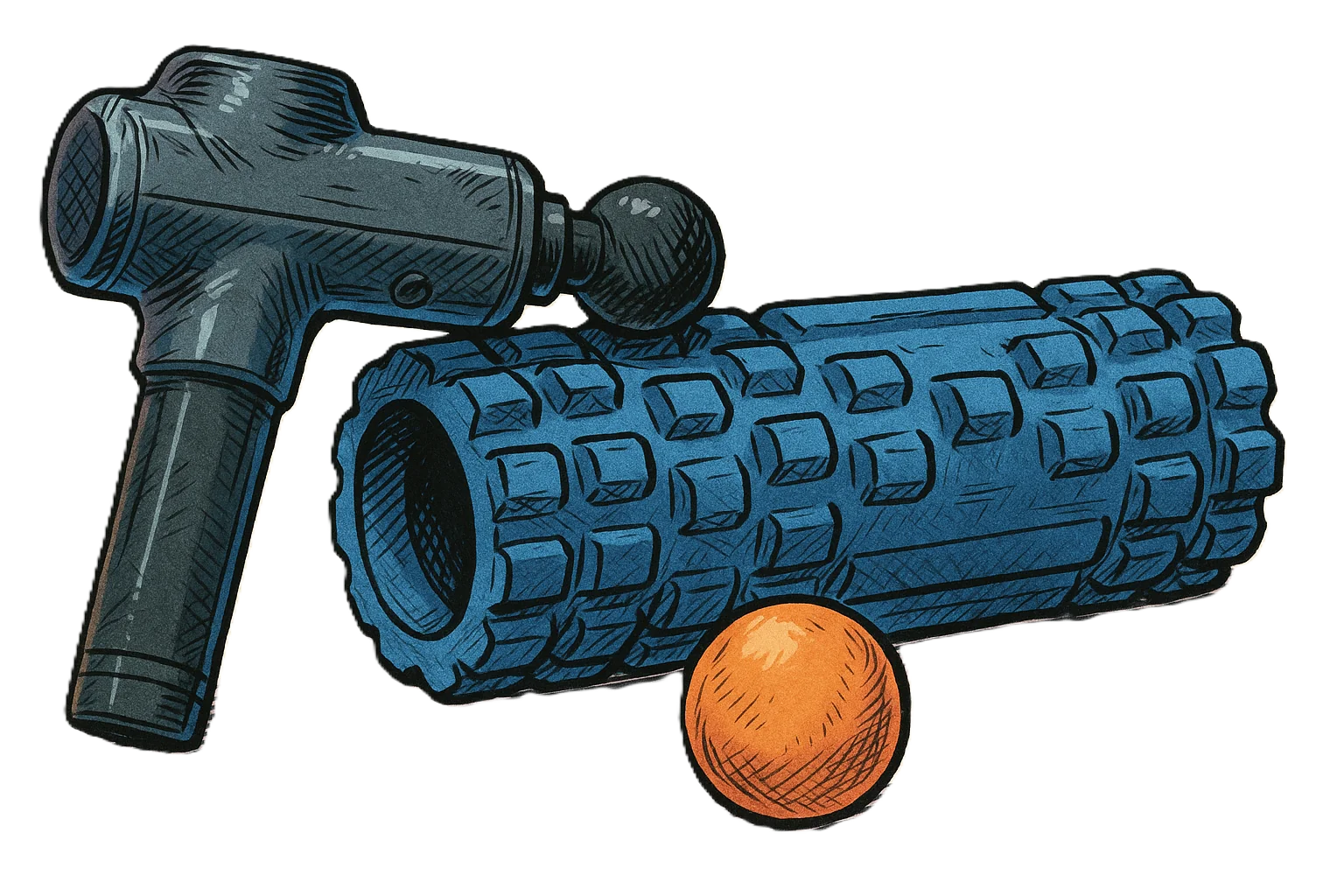
What is self-massage?
We are talking here about targeted techniques where you use accessories such as foam rollers , massage balls and guns, or simply your hands to work the muscle tissues.
The goal is to act on contracted areas to facilitate blood circulation and faster recovery, like a classic massage, but in an active version.
It's less relaxing, more demanding, but just as effective.
Just as effective?
Overall, massage and self-massage play the same role : applying pressure to muscles to stimulate circulation, relax tissues and soothe pain.
However, the way this pressure is applied and the context in which it occurs can make all the difference.
- Advantages : you are completely passive, which allows for total relaxation.
The practitioner can adapt their movements to your body in real time, go deeper, detect tensions that you hadn't even identified, and modulate the pressure according to your reactions.
- Disadvantages : It's more expensive, you have to make an appointment, get organized, ...
It's not always easy to fit into a busy schedule, and it's not accessible to all budgets.
-
Advantages : you can do it whenever you want, at home, without depending on anyone.
It's economical, adaptable, and perfect for regular recovery, after training or at the end of the day.
Tools like rollers, balls or guns allow you to target specific areas effectively, and you learn to know your own body better.
- Disadvantages : With the foam roller, for example, you remain active (you use certain muscles to maintain your position and apply pressure), so the relaxation is not total.
It takes a bit of technique to perform the movements correctly, and some areas remain difficult to reach on your own. If the pressure isn't applied properly, it can even cause some discomfort or miss areas that are really tense.
Therefore, one is not necessarily better than the other; they are complementary .
Ideally, you can alternate between the two : book a professional massage occasionally when you feel your body really needs it, and use self-massage for your daily recovery.
Namely
Research has not shown a clear superiority of one over the other in terms of muscle recovery. In both cases, a reduction in muscle soreness and an improvement in the perceived condition of the muscles after exercise are observed.
MASSAGE OILS
When I started cooking regularly, I finally understood the value of spices. They are not essential to the recipe, but they transform the experience with more flavor, more pleasure, and more benefits .
Massage oils and essential oils have the same role in the practice of massage: they are not fundamental, but in the end it is very rare that I cook without spices.

Why use massage oil?
Basically, the oil has a simple function: to limit friction between the skin and the practitioner's hands (or tools in the case of self-massage).
By avoiding excessive friction, it allows for deeper pressure and more efficient continuous movement .
A massage performed with oil can therefore reach deeper tissues without irritating the skin, preventing the session from becoming uncomfortable, which enhances the relaxing effect.
Why add essential oils?
Adding a few drops of essential oils takes it to the next level .
Certain oils directly impact your recovery. They help release tension, support muscle repair, or soothe the nervous system. Here are a few examples:
Thanks to the menthol, it provides a cooling sensation and acts as a mild local anesthetic.
Complete information sheet on peppermint
Thanks to its soothing properties, it helps to release nervous tension, promotes relaxation, and can improve sleep quality (useful for recovery).
Which lavender should you choose depending on your needs?
Eucalyptus is known for its anti-inflammatory properties, particularly on muscles and joints.
In particular, camphorated rosemary stimulates blood circulation and soothes muscle contractions.
Simply add a few drops to your massage oil (argan, almond, coconut, etc.), respecting the dosages , so as not to irritate the skin.
In summary
Adding oil makes the massage smoother and more pleasant. Enriched with essential oils, it enhances its effects on pain and tension.
BIOPOTIMIZE YOUR ROUTINE
What is the ideal time?
To maximize the effects of a massage on your muscle recovery, timing is important.
Most studies show that the analgesic and anti-inflammatory effects of massage are most beneficial when your muscle soreness reaches its peak between 24 and 48 hours after exercise .
A meta-analysis even showed that the effect on pain reduction was twice as great at 48 hours as at 24 hours.
What frequency should be adopted?
There is no clear, scientific answer to this question. Therefore, we will use our common sense to answer it:
- While beneficial, massage can also cause mild irritation if it is too intense or too frequent, especially on the same areas. Therapists often recommend spacing deep tissue massages on the same muscle group at least 48 hours apart .
- On the other hand, light massages or self-massage can be incorporated more frequently because they are less deep, provided that you do n't go too hard .
- The more you train, the more massage can be beneficial to your recovery. Conversely, if you are in a resting phase or with little activity, you will need it less.
Mistakes to avoid
- Massaging too hard or for too long on a sensitive area : you can worsen micro-lesions rather than help them heal.
- Thinking that the more painful it is, the better : a good massage doesn't need to hurt to be effective.
- Getting a massage right before intense physical exercise : its relaxing effect can actually harm your performance
CONCLUSION
A well-executed massage, even a simple and short one, is an effective method to accelerate your recovery and boost your workouts.
Today, there are all sorts of tools that make massage accessible and within everyone's reach. You don't need to be a pro athlete to incorporate it into your routine and reap the benefits.
FAQ
Frequently Asked Questions
Light activity lasting 5 to 10 minutes increases blood flow to the muscles. This makes massage more effective by warming the tissues.
A pre-workout massage is more invigorating, targeting the muscle groups that will be used. It aims to increase circulation, warm up the tissues, and improve mobility.
Each tool has its own characteristics:
- The foam roller distributes even pressure but requires active effort to move the body.
- The balloon or ball allows you to target small, precise areas but requires good control to avoid discomfort.
- The massage gun applies rapid percussions.
Focus on high-stress areas (quadriceps, hamstrings, calves, upper back, shoulders). Avoid injured or sensitive areas, as pressure can aggravate micro-tears. Also, pay attention to your body's reaction: if you experience a sharp pain or prolonged discomfort, reduce the intensity or stop the session.